
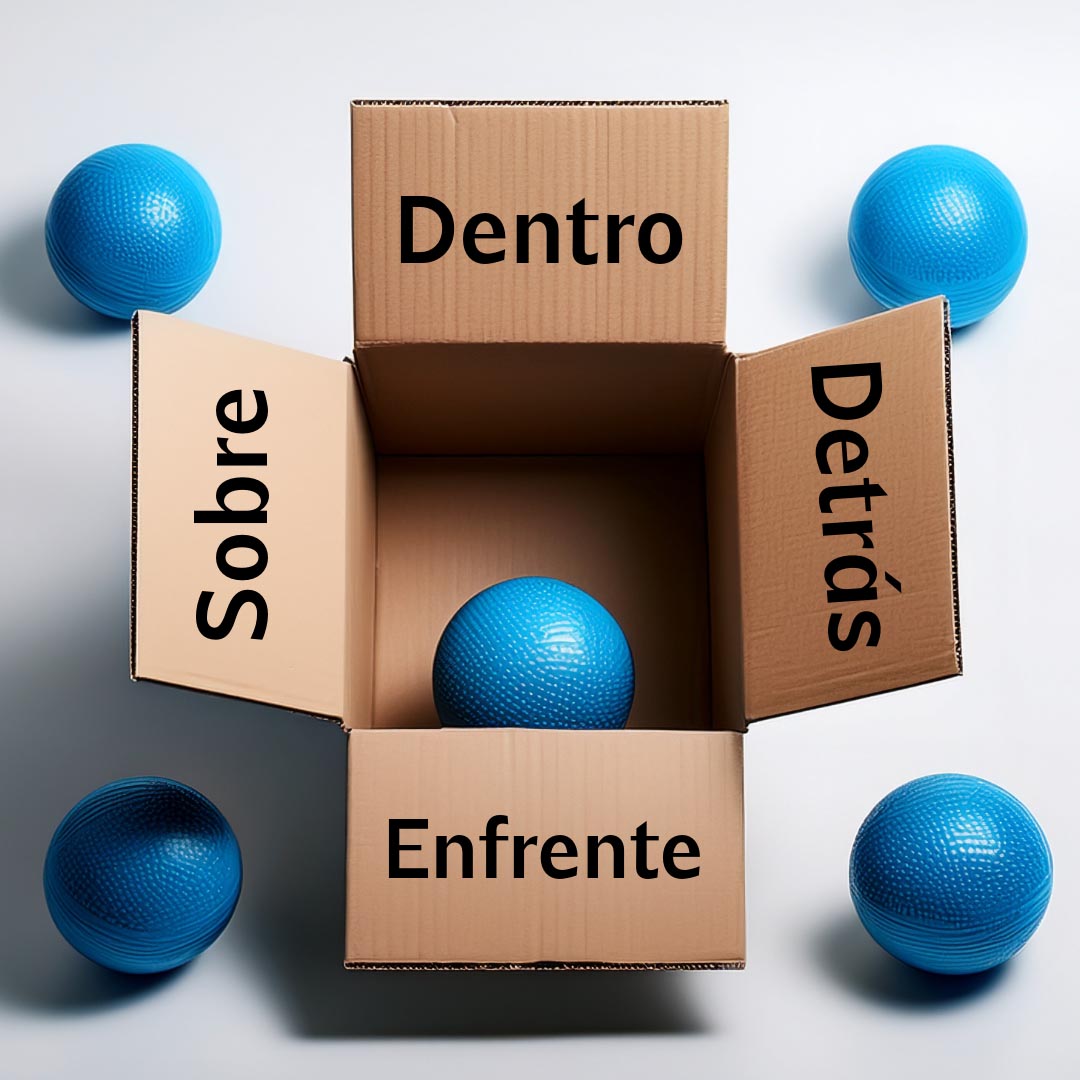
Spanish Prepositions: The Invisible Connectors
Spanish prepositions are small but mighty words. You may not even notice them when native speakers use them; but without them, sentences fall apart. They’re the invisible connectors that tell you where, when, how, and why something happens.
Think of prepositions as the glue that binds ideas together:
Estoy en casa.
Salimos después de comer.
Es el regalo de Ana.
They don’t change form. They don’t get conjugated. But they’re absolutely essential.
What Do Spanish Prepositions Do?
Prepositions in Spanish show relationships between words. They help you express:
- Place – en (in), sobre (on), bajo (under)
- Time – antes de (before), durante (during), hasta (until)
- Cause or motive – por (because of), a causa de (due to)
- Purpose – para (in order to), con el fin de (with the purpose of)
- Manner or means – con (with), sin (without), mediante (by means of)
- Possession or origin – de (of, from)
These are just a few examples. There are many more prepositions in Spanish, and each one brings its own meaning and nuance.
Why Are Prepositions Tricky?
Because they don’t always translate word-for-word from English. For example:
- I dream about you → Sueño contigo (not “sobre ti”)
- It depends on you → Depende de ti (not “en ti”)
- Think about it → Piensa en eso (not “sobre eso”)
You’ll also hear expressions like gracias a, en contra de, or a pesar de that must be learned as fixed chunks.
Start Noticing Them Everywhere
The best way to master Spanish prepositions is to listen, read, and notice them in context. Once you recognize how they connect ideas, your sentences will start sounding clearer, more natural, and more Spanish.
Ready to practice this with a real teacher?
Book a free 1:1 Spanish class over Zoom with a Spanish Hobby teacher. A native Spanish speaker who teaches with The Spanish Map. No commitment, no pressure.
Or explore where this fits in the bigger picture: try the Map Locator and see how any Spanish word or expression lands on The Spanish Map.